


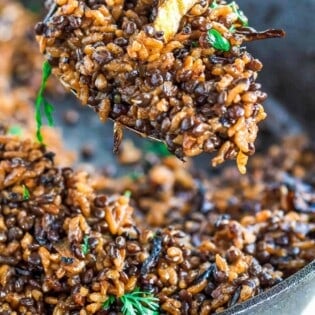
Adas polo is a traditional Persian rice and lentil recipe seasoned with cinnamon and saffron, layered with caramelized onions, raisins, and dates, and finished with a crispy tahdig layer. As pretty as it is delicious, this fragrant golden rice deserves center-stage on your dinner table!
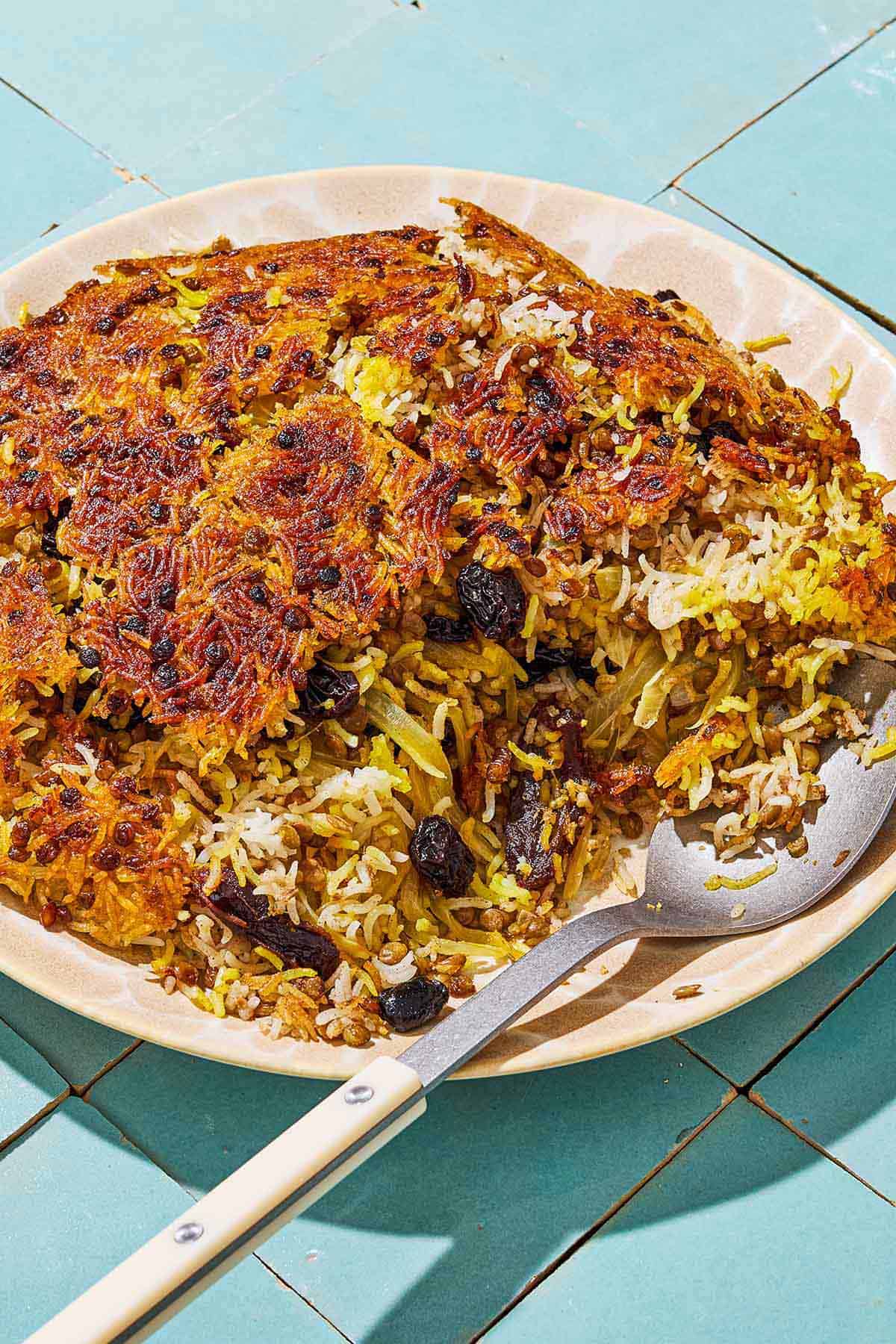
Photo Credits: Ali Redmond
Adas Polo is similar to Mujadara but with a different flavor profile. Both of these Middle Eastern recipes have rice, lentils, and onions as foundational elements, but they are seasoned differently. Adas Polo is scented with saffron and cinnamon and includes the crispy tahdig layer, dates, and raisins. It’s traditionally made with lamb mince or mini meatballs layered throughout, but with the lentils providing sufficient protein, it’s spectacular as a satisfying vegetarian feast. Mujadara has fewer spices and skips the extra ingredients.
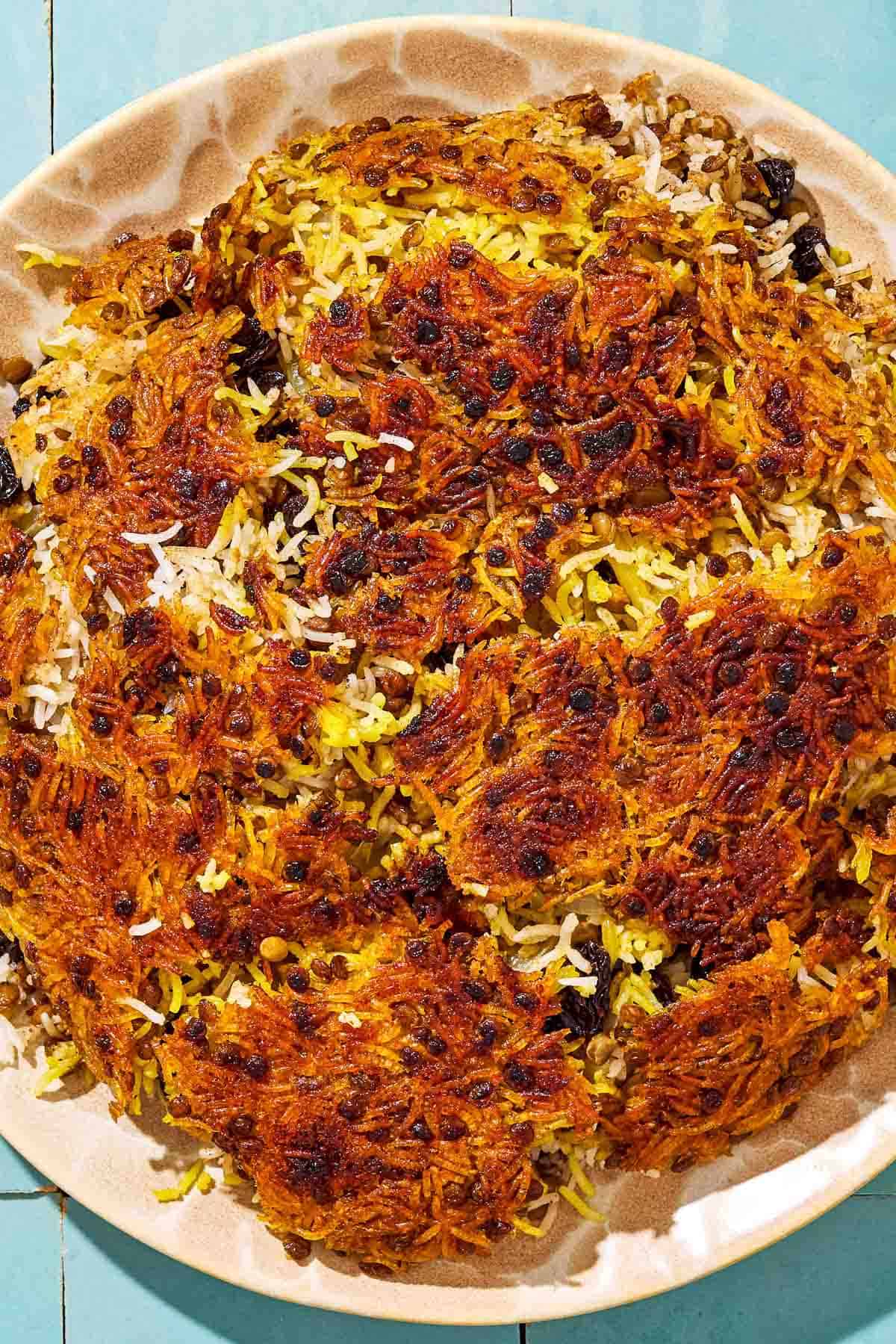
Growing up in a Persian family we always served Adas Polo at family parties ( mehmoonis ) and other special occasions like weddings, Persian New Year celebrations, and, in my case, at Christmas alongside the Roast Turkey and all the trimmings! This recipe will also show you how to make a beautifully golden Tahdig. Tahdig translated from Persian to English means “bottom of the pot.” It refers to the crispy crust formed as a result of the cooking process, as with my Persian Rice With Potato Tahdig . The bottom layer of the rice fries in a little oil, which creates a crunchy layer while the remaining rice steams and softens.
There is a truly regal quality to the combination of ingredients and flavors in this dish. For me, it is a celebration of Middle Eastern cuisine.
- Adas Polo Ingredients
- Ingredient Spotlight
- How to Make Adas Polo
- What to Serve with Adas Polo
- How to Store Adas Polo
- More Occasion-Worthy Rice Dishes
- Adas Polo (Persian Rice and Lentils with Caramelized Onions, Dates and Raisins) Recipe
Adas Polo Ingredients
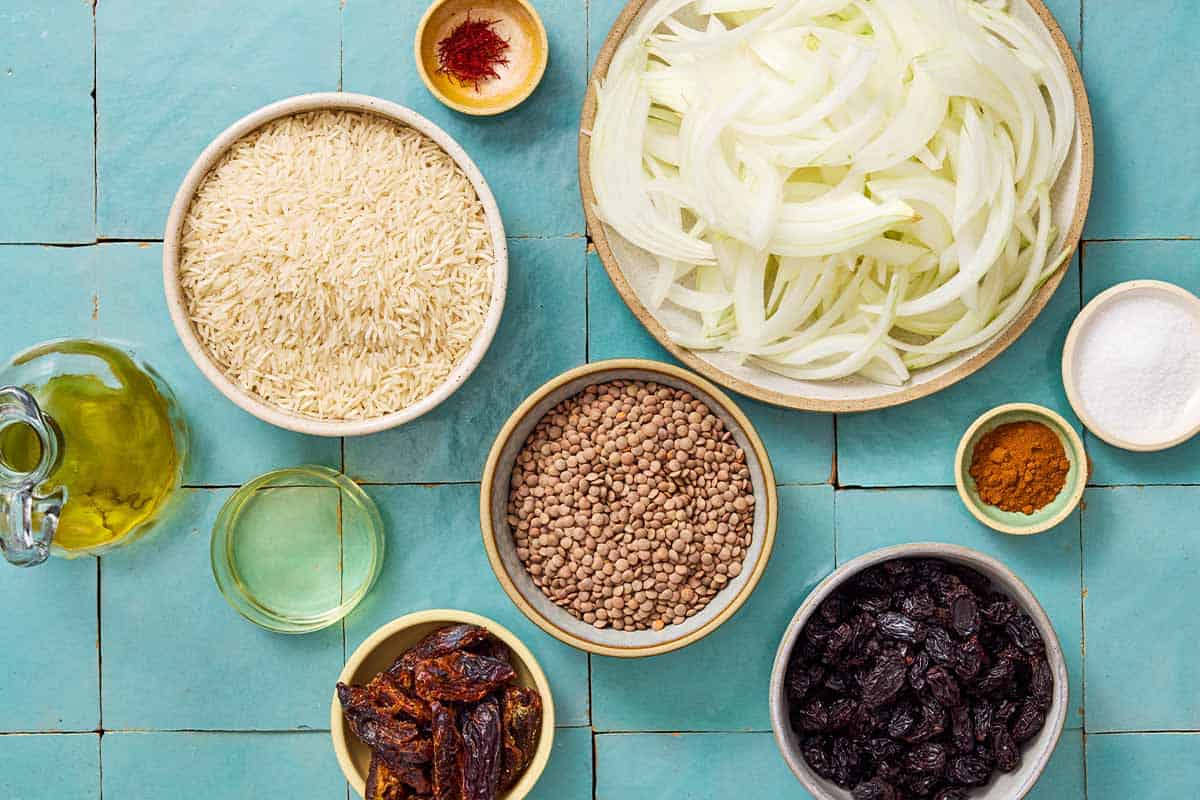
Adas means “lentils” and Polo refers to rice dishes that are layered with other ingredients. In order to make this classic Persian recipe you will need the following ingredients:
- Basmati rice : A long grain and aromatic rice, essential for creating Persian rice dishes. My favorite brand is Tilda but any Basmati rice available at your local supermarket is fine to use.
- Dried green or brown lentils: Provide the protein, as well as a delicious nutty flavor and a contrasting texture to the tender rice. You’re looking for al dente lentils, so starting from dried is crucial–canned lentils will get mushy. You can use dried green lentils as an alternative ( which we carry at the shop ).
- Dates: Add a layer of Maple sugar-like sweetness.
- Raisins: I use brown raisins but you can use green or golden, or a mix of all colors.
- Onions: Caramelized over high heat to give a crisp texture and sweet-and-savory flavor, marrying the layers.
- Cinnamon: Gives a warming flavor profile and complements the sweeter elements.
- Saffron : Imparts a floral and musky tone and gives flecks of golden color throughout the final dish. READ MORE: What Is Saffron? An Essential Guide TRY IT: Get Moroccan Saffron from our spice shop delivered to your door.
- Neutral flavored oil: Used to crisp the tahdig layer over high heat (I use vegetable oil).
- Olive oil: Used to cook the onions and to gently sautée the raisins before layering in the rice. The olive oil helps to fluff and separate the rice once it is cooked. Traditionally Persians use a mix of vegetable oil and melted butter or ghee but substituting with olive oil makes this a healthier version with more nuance in terms of flavor. READ MORE: Cooking with Olive Oil: Everything You Need to Know! TRY IT: B rowse our curated selection of extra virgin olive oils at our online shop .
- Kosher salt: Salt is essential for flavoring the rice otherwise it will be bland.
Ingredient Spotlight
Lentils are a major staple of Middle Eastern and Mediterranean cuisine and for good reason: They keep well, are rich in protein, fiber, and essential minerals like iron and folate, and add heft and texture to soup, salad, and more.
Adas Polo typically calls for brown lentils, but green lentils are an excellent choice as well. Unlike red lentils, which become creamy, both green (or “Puy”) and brown lentils keep their shape once they’re cooked.
Green lentils can sometimes take longer to cook. No matter which variety you choose, just be sure they’re cooked until tender on the outside with a delicate bite in the center before draining them. They’ll finish cooking when you steam the rice.
- TRY IT: Order Organic Green Lentils from Our Shop.
How to Make Adas Polo
This is a wow-worthy side dish that uses very few ingredients, but it does require some extra care. Here’s how it’s done:
Get the Rice and Lentils Ready
- Rinse and soak the rice: Rinse the rice with cold water until the water runs clear. Place in a bowl and cover with cold water until it is two inches above the rice. Leave to soak for at least 30 minutes, or ideally overnight, which removes the starch and makes for a better texture. Drain.
- Bloom the saffron: Put 1 pinch of saffron threads into a mortar and grind with a pestle (you can also do this in a spice grinder.) To a small bowl, combine the 1/2 teaspoon ground saffron and 1/3 cup water. Set aside to bloom.
- Cook the lentils: Into a medium-sized saucepan set over medium-high heat, add 1 cup brown or green lentils and cover with water until it is 2-inches above the lentils. Bring to a boil. Cook the lentils until they are tender on the outside but a little firm in the middle, about 20 minutes, then drain using a fine mesh strainer.
- Season the lentils. Return the lentils to the pan (off the heat). Add 2 teaspoons ground cinnamon, 1 tablespoon olive oil, and stir to combine. Set aside.
- Prepare the onions: Line a plate with paper towels and set it near your stove. Set a large cast iron skillet over medium-high heat. Add the remaining 3 tablespoons olive oil. When the oil begins to shimmer, add 2 finely sliced onions. Sauté, stirring regularly, until they’re golden and crisp. Reduce heat, if necessary, to ensure all onions cook evenly without burning, about 20 minutes. Use a slotted spoon or tongs to transfer the onions to the paper towel-lined plate to drain. Set aside.
- Season the raisins: In the same skillet used to cook the onions, turn the heat to low and add 1 cup raisins. Stir until they’re coated in the onion-flavored oil, about 1 minute. Transfer to a bowl and set aside.
Parboil the Rice and Make the Tahdig Layer
- Parboil the rice: Set a large non-stick pot, over high heat. Add 8 cups of water and 2 tablespoons kosher salt and bring to a boil. Once boiling, add the drained rice and cook for 5 to 7 minutes, until the rice is slightly softened but still firm. Drain through a fine mesh strainer, then stir the parboiled rice into the cinnamon-spiced lentils. Rinse out the pot you cooked the rice in and return it to the stove.
- Prepare the tahdig layer: To a medium mixing bowl, add 1 cup of the cooked rice and lentil mixture and 1 tablespoon of the bloomed saffron water. Stir very gently until the rice turns golden.
- Crisp the tahdig layer : Pour the neutral oil into the pot you used to cook the rice, but do not turn on the heat yet. Add the saffron rice and lentil mixture and use the back of a spoon to push into a flat layer all across the pot.
Layer and Steam Until Tender
- Layer the rice: Add the remaining rice mixture (you don’t need to press this layer down). Next, scatter the caramelized onions on top, then the raisins, 8 pitted and quartered Medjool dates, and a drizzle of the remaining saffron water. Use the end of a spoon to poke 5 holes evenly across the rice from top to bottom.
- Steam the rice: Put a lid on the saucepan and turn heat to high. Once steam starts to rise, reduce heat to low–ideally you have a glass lid, but if not this should take about 5 minutes. Keep a close eye on the pot to avoid burning the tahdig. Wrap a tea-towel around the lid, and place it back on the pot. Continue to cook for 1 hour, covered over low heat to allow the rice to steam.
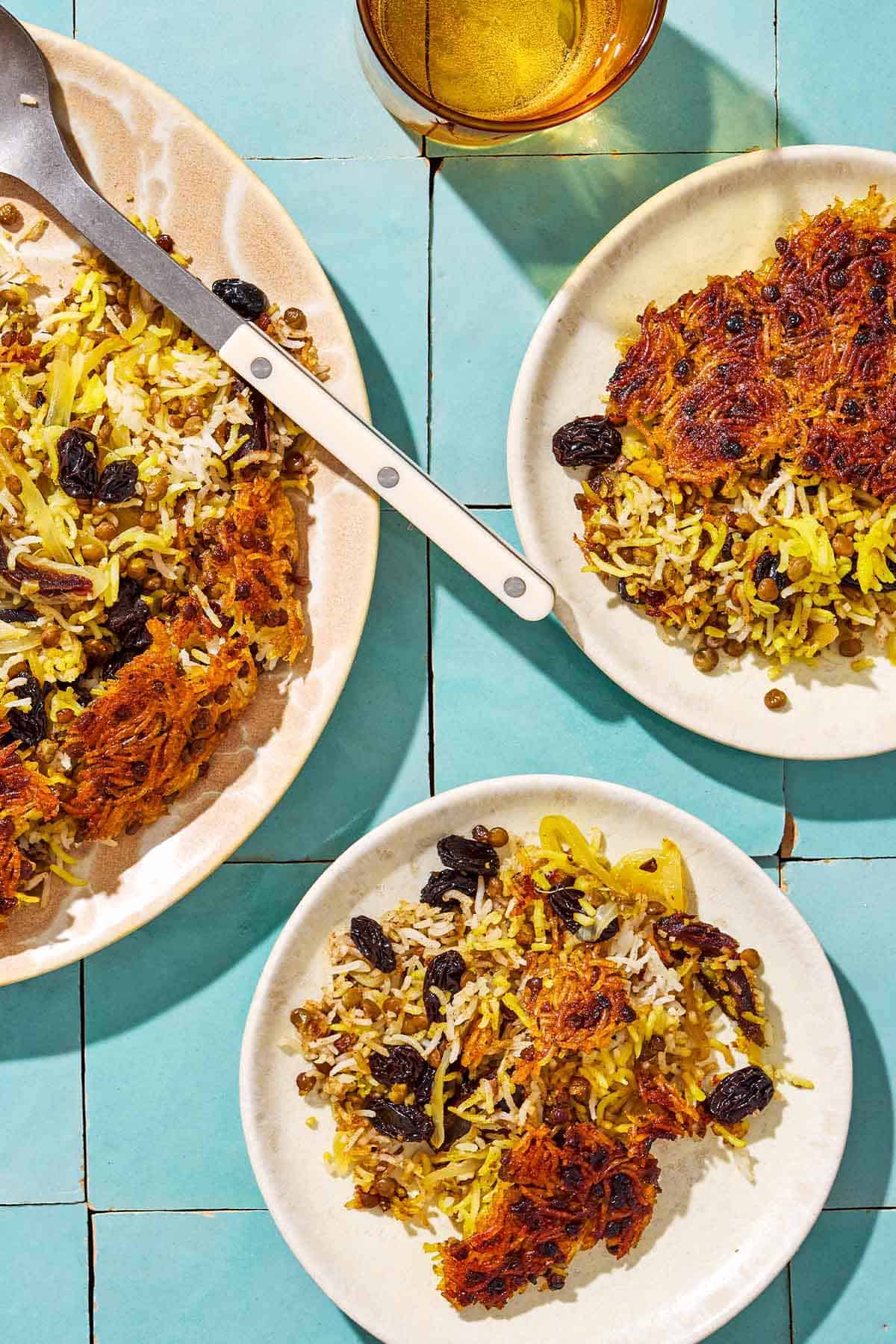
- Serve the rice and lentils: Remove the lid, gently fluff the rice to mix, then spoon into a serving dish. Use a spatula to get under the edges of the crispy tahdig layer, then carefully lift it out of the pot. Serve the crispy tahdig in a separate dish in one piece, or break up and place around the edge of the rice.
What to Serve with Adas Polo
As the lentils give this dish protein, you can simply serve adas polo with salad, such as Shirazi Salad and a side of yogurt sauce, such as Tzatziki .
For a dinner party, serve alongside Super Tender Braised Lamb Shanks . It is also delicious with fried eggs for lunch, like these Za’atar Eggs Fried in Olive Oil . Have some leftovers? Use them in place of the readymade pilaf in this recipe for Stuffed Acorn Squash .
How to Store Adas Polo
- To refrigerate: Store in an airtight container in the fridge for up to 5 days. Be sure to allow the rice to cool fully before placing it in the fridge.
- To freeze: Allow it to cool completely, then transfer to freezer bags or containers. It will last for up to 3 months in the freezer.
- To reheat the rice: Splash a little water over the rice and cook on low heat on the stove. You can also reheat in the microwave using the appropriate microwave dish.
- To reheat the tahdig : Crisp it up in a hot oven or an air fryer.
More Occasion-Worthy Rice Dishes
Lebanese
Mujadara: Lentils and Rice with Crispy Onions

Persian
Tahdig Recipe (Crispy Persian Rice)

Sides and Small Plates
Loaded Lebanese Rice: Hashweh (video)

Persian
Persian Rice with Potato Tahdig
Browse All Mediterranean Recipes
Visit Our Shop
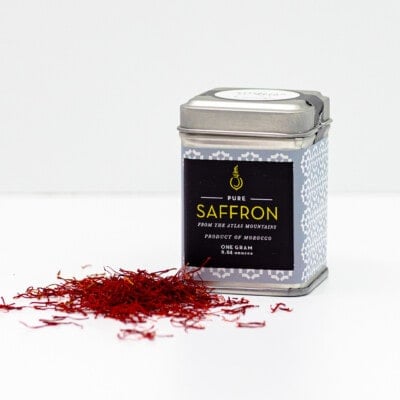
Try Our Favorite Saffron!
Pure Saffron Threads harvested from Morocco’s Atlas Mountains
Ingredients1x2x3x
- ▢ 2 cups Basmati rice
- ▢ 1 pinch saffron threads (to make 1/2 teaspoon ground saffron)
- ▢ 1 cup green lentils or brown lentils
- ▢ 2 teaspoons ground cinnamon
- ▢ 1/4 cup extra virgin olive oil
- ▢ 2 yellow onions, finely sliced
- ▢ 1 cup raisins
- ▢ 2 tablespoons kosher salt
- ▢ 2 tablespoons neutral oil (I use vegetable oil)
- ▢ 8 Medjool dates, pitted and quartered
Instructions
- Rinse and soak the rice. Rinse the rice with cold water until the water runs clear. Place in a bowl and cover with cold water until it is two inches above the rice. Leave to soak for at least 30 minutes, or ideally overnight (see note), then drain.
- Bloom the saffron. Put the saffron threads into a mortar and grind with a pestle (you can also do this in a spice grinder.) To a small bowl, combine the 1/2 teaspoon ground saffron and 1/3 cup water. Set aside to bloom.
- Cook the lentils. Into a medium-sized saucepan set over medium-high heat add the lentils and cover with water until it is 2-inches above the lentils. Bring to a boil. Cook the lentils until they are tender on the outside but a little firm in the middle, about 20 minutes, then drain using a fine mesh strainer.
- Season the lentils. Return the lentils to the pan (off the heat). Add the cinnamon, 1 tablespoon of the olive oil, and stir to combine. Set aside.
- Prepare the onions. Line a plate with paper towels and set it near your stove. Set a large cast iron skillet over medium-high heat. Add the remaining 3 tablespoons olive oil. When the oil begins to shimmer, add the onions. Sauté, stirring regularly, until they’re golden and crisp. Reduce heat, if necessary, to ensure all onions cook evenly without burning, about 20 minutes. Use a slotted spoon or tongs to transfer the onions to the paper towel-lined plate to drain. Set aside.
- Season the raisins. In the same skillet used to cook the onions, turn the heat to low and add the raisins. Stir until they’re coated in the onion-flavored oil, about 1 minute. Transfer to a bowl and set aside.
- Parboil the rice. Set a large non-stick pot, over high heat. Add 8 cups of water and the salt and bring to a boil. Once boiling, add the rice and cook for 5 to 7 minutes, until the rice is slightly softened but still firm. Drain through a fine mesh strainer, then stir the parboiled rice into the cinnamon-spiced lentils. Rinse out the pot you cooked the rice in and return it to the stove.
- Prepare the tahdig layer. To a medium mixing bowl, add 1 cup of the cooked rice and lentil mixture and 1 tablespoon of the bloomed saffron water. Stir very gently until the rice turns golden.
- Crisp the tahdig layer. Pour the neutral oil into the pot you used to cook the rice, but do not turn on the heat yet. Add the saffron rice and lentil mixture and use the back of a spoon to push into a flat layer all across the pot.
- Layer the rice. Add the remaining rice mixture (you don’t need to press this layer down). Next, scatter the caramelized onions on top, then the raisins, dates and a drizzle of the remaining saffron water. Use the end of a spoon to poke 5 holes evenly across the rice from top to bottom.
- Steam the rice. Put a lid on the saucepan and turn heat to high. Once steam starts to rise, reduce heat to low–ideally you have a glass lid, but if not this should take about 5 minutes. Keep a close eye on the pot to avoid burning the tahdig. Wrap a tea-towel around the lid, and place it back on the pot. Continue to cook for 1 hour, covered over low heat to allow the rice to steam.
- Serve the rice. Remove the lid, gently fluff the rice to mix, then spoon into a serving dish. Use a spatula to get under the edges of the crispy tahdig layer, then carefully lift it out of the pot. Serve the crispy tahdig in a separate dish in one piece, or break up and place around the edge of the rice.
Video
Notes
- Shop this recipe: Visit our shop to browse quality Mediterranean ingredients including the saffron used in this recipe.
- Why soak the rice? I find the fragrance and texture of the rice is better after soaking overnight. Washing the rice removes the starch from the rice, making it fluffier and less likely to clump. It also allows the water to reach the center of the grain, and makes the rice easier to digest.
- If you’re short on time, however, you can cook the rice after just a few hours or even after rinsing thoroughly (the water should run clear).

Adas Polo (Persian Rice and Lentils with Caramelized Onions, Dates and Raisins)
Ingredients
- 2 cups Basmati rice
- 1 pinch saffron threads (to make 1/2 teaspoon ground saffron)
- 1 cup green lentils or brown lentils
- 2 teaspoons ground cinnamon
- 1/4 cup extra virgin olive oil
- 2 yellow onions, finely sliced
- 1 cup raisins
- 2 tablespoons kosher salt
- 2 tablespoons neutral oil (I use vegetable oil)
- 8 Medjool dates, pitted and quartered
Instructions
- Rinse and soak the rice. Rinse the rice with cold water until the water runs clear. Place in a bowl and cover with cold water until it is two inches above the rice. Leave to soak for at least 30 minutes, or ideally overnight (see note), then drain.
- Bloom the saffron. Put the saffron threads into a mortar and grind with a pestle (you can also do this in a spice grinder.) To a small bowl, combine the 1/2 teaspoon ground saffron and 1/3 cup water. Set aside to bloom.
- Cook the lentils. Into a medium-sized saucepan set over medium-high heat add the lentils and cover with water until it is 2-inches above the lentils. Bring to a boil. Cook the lentils until they are tender on the outside but a little firm in the middle, about 20 minutes, then drain using a fine mesh strainer.
- Season the lentils. Return the lentils to the pan (off the heat). Add the cinnamon, 1 tablespoon of the olive oil, and stir to combine. Set aside.
- Prepare the onions. Line a plate with paper towels and set it near your stove. Set a large cast iron skillet over medium-high heat. Add the remaining 3 tablespoons olive oil. When the oil begins to shimmer, add the onions. Sauté, stirring regularly, until they’re golden and crisp. Reduce heat, if necessary, to ensure all onions cook evenly without burning, about 20 minutes. Use a slotted spoon or tongs to transfer the onions to the paper towel-lined plate to drain. Set aside.
- Season the raisins. In the same skillet used to cook the onions, turn the heat to low and add the raisins. Stir until they’re coated in the onion-flavored oil, about 1 minute. Transfer to a bowl and set aside.
- Parboil the rice. Set a large non-stick pot, over high heat. Add 8 cups of water and the salt and bring to a boil. Once boiling, add the rice and cook for 5 to 7 minutes, until the rice is slightly softened but still firm. Drain through a fine mesh strainer, then stir the parboiled rice into the cinnamon-spiced lentils. Rinse out the pot you cooked the rice in and return it to the stove.
- Prepare the tahdig layer. To a medium mixing bowl, add 1 cup of the cooked rice and lentil mixture and 1 tablespoon of the bloomed saffron water. Stir very gently until the rice turns golden.
- Crisp the tahdig layer. Pour the neutral oil into the pot you used to cook the rice, but do not turn on the heat yet. Add the saffron rice and lentil mixture and use the back of a spoon to push into a flat layer all across the pot.
- Layer the rice. Add the remaining rice mixture (you don’t need to press this layer down). Next, scatter the caramelized onions on top, then the raisins, dates and a drizzle of the remaining saffron water. Use the end of a spoon to poke 5 holes evenly across the rice from top to bottom.
- Steam the rice. Put a lid on the saucepan and turn heat to high. Once steam starts to rise, reduce heat to low–ideally you have a glass lid, but if not this should take about 5 minutes. Keep a close eye on the pot to avoid burning the tahdig. Wrap a tea-towel around the lid, and place it back on the pot. Continue to cook for 1 hour, covered over low heat to allow the rice to steam.
- Serve the rice. Remove the lid, gently fluff the rice to mix, then spoon into a serving dish. Use a spatula to get under the edges of the crispy tahdig layer, then carefully lift it out of the pot. Serve the crispy tahdig in a separate dish in one piece, or break up and place around the edge of the rice.
Video
Notes
- Shop this recipe: Visit our shop to browse quality Mediterranean ingredients including the saffron used in this recipe.
- Why soak the rice? I find the fragrance and texture of the rice is better after soaking overnight. Washing the rice removes the starch from the rice, making it fluffier and less likely to clump. It also allows the water to reach the center of the grain, and makes the rice easier to digest.
- If you’re short on time, however, you can cook the rice after just a few hours or even after rinsing thoroughly (the water should run clear).
QR code
Scan this QR code with your phone’s camera to view this recipe on your mobile device.
https://www.themediterraneandish.com/adas-polo-rice-and-lentils-recipe/
